

Schools are under growing pressure to create calmer classrooms, reduce distraction, and protect student attention without turning every lesson into a battle over confiscated devices. That is why the conversation around the Lockable phone pouch has moved from novelty to serious operational decision. For school leaders, the real question is not simply whether pouches work in theory, but whether the investment makes practical sense once purchasing, rollout, staff effort, student compliance, and long-term policy goals are all considered together.
Why schools are considering a lockable phone pouch at all
The appeal of a pouch-based system is straightforward: it gives schools a consistent structure for limiting phone access during the day without relying on constant confrontation. In many schools, traditional phone rules sound firm on paper but become uneven in practice. Teachers enforce them differently, students test boundaries, and administrators end up dealing with recurring conflicts that drain time and credibility.
A Lockable phone pouch changes the mechanics of enforcement. Instead of asking every teacher to monitor every pocket, desk, and backpack, the school creates a visible, shared routine. Students keep possession of their phones, but access is restricted during instructional time. That distinction matters. It can lower anxiety from families who want students to retain their devices for travel or emergencies, while still supporting a stronger phone-free culture in the classroom.
It also helps to think of the pouch not as a product alone, but as part of a behavioral framework. The strongest systems reduce ambiguity. Students know when phones are locked, how they are unlocked, where accountability sits, and what happens if rules are ignored. That clarity is often where the value begins.
What really drives lockable phone pouch pricing
School leaders sometimes focus first on unit price, but pouch pricing is only one piece of the decision. The total investment depends on durability, replacement frequency, storage and unlocking logistics, staff training, and how well the model fits daily school movement. A cheaper pouch that wears out quickly or creates bottlenecks can become more expensive over time than a stronger system with better operational design.
When evaluating a Lockable phone pouch solution, schools should look at the complete structure around it, not just the physical item. That includes how students lock and unlock devices, whether the process is centralized or decentralized, how quickly the system works at scale, and what level of staff intervention is required each day.
Safe Pouch® from Win Elements is relevant in this context because its positioning around a decentralized phone ban speaks directly to one of the most important pricing questions: what will this cost in staff time as well as procurement? A system that reduces crowding at a single checkpoint and avoids daily friction at entrances may offer stronger operational value than one that appears less expensive upfront.
| Pricing Factor | What to Examine | Why It Matters |
|---|---|---|
| Pouch durability | Material strength, closures, expected lifespan | Frequent replacements raise real annual cost |
| Unlocking model | Centralized stations vs decentralized access points | Affects queues, supervision, and daily disruption |
| Implementation support | Training, rollout guidance, policy integration | Weak rollout can undermine even a good product |
| Loss and damage planning | Replacement process and accountability rules | Protects the program from becoming chaotic |
| Staff workload | Monitoring burden and exception handling | Labor cost is often hidden but significant |
How to measure value beyond the purchase price
The most useful way to judge a phone pouch program is to compare it against the cost of the problem it is meant to solve. Those costs are rarely shown on an invoice, but they are real: interrupted lessons, repeated redirection, disciplinary inconsistency, student conflict, and the broader erosion of attention across the school day.
That does not mean every school should automatically buy a pouch system. It does mean leaders should assess value in educational and operational terms, not only financial ones. If the school already enforces a no-phone policy with high consistency and minimal staff strain, a pouch system may be unnecessary. But if the existing rule is widely ignored or enforced unevenly, a structured pouch program can serve as a practical reset.
Here are the most important value questions to ask:
- Will it reduce teacher-by-teacher enforcement? If yes, it may improve consistency and morale.
- Will it protect instructional time? Even small gains matter when repeated across every period.
- Will students understand the rule clearly? Visible systems tend to reduce argument and loophole-seeking.
- Will families see the logic? Retaining possession of the device can make adoption easier.
- Will it be manageable every single day? A policy that works only during launch week is not a sound investment.
In other words, schools should define success before comparing options. If success means fewer devices visible in class, the solution may be different from a school whose goal is to create a fully phone-free culture from first bell to dismissal.
Where schools overspend, and where they should not cut corners
One of the most common mistakes is paying for a system without investing equal thought in implementation. A pouch program is only as strong as the routines behind it. If staff are unclear on enforcement, exceptions, breakages, medical accommodations, or after-school procedures, the system can quickly lose credibility.
Another mistake is choosing purely on lowest upfront cost. Schools should be careful about products that appear simple but create avoidable friction. Long end-of-day lines, heavy dependence on a few staff members, or a lack of replacement structure can turn a manageable policy into a daily source of frustration. In that case, the school may spend more indirectly through supervision demands and repeated policy disputes.
At the same time, there are areas where schools can stay disciplined:
- Do not overcomplicate the policy. A clear rule is more valuable than an elaborate one with multiple exceptions.
- Do not buy beyond realistic need. Plan for enrollment, transfers, and breakage, but avoid vague overordering.
- Do not ignore staff training. Brief, practical alignment is often more valuable than lengthy documentation.
- Do not skip parent communication. Resistance often falls when the school explains the educational purpose clearly.
The best investments are usually the ones that combine durable physical tools with simple daily routines. That is where solutions such as Safe Pouch® can stand out: not because a pouch alone solves student distraction, but because the surrounding system can make compliance more natural and enforcement less exhausting.
How to decide whether Safe Pouch pricing is a smart investment for your school
A smart investment is one that fits your school’s culture, staffing, and policy goals. For some campuses, a pouch system will be most effective as a whole-school expectation. For others, it may work best at middle school level, during exams, or in environments where device misuse has become a recurring barrier to learning.
Before making a decision, school leaders should work through a short evaluation process:
- Audit the current reality. How often are phones disrupting classes, and how consistently are rules enforced?
- Define the objective. Is the goal reduced distraction, complete in-class restriction, or a broader phone-free day?
- Map the workflow. Where will locking happen, how will unlocking happen, and who is responsible?
- Review hidden costs. Consider supervision, exceptions, replacements, and communication.
- Test for sustainability. Could this system still work smoothly six months after launch?
If the answer to those questions points toward a more disciplined, workable, and lower-conflict environment, then the investment may be justified even if the upfront pricing gives pause. Good school spending is not always about choosing the cheapest option. It is about choosing the option that solves a persistent problem without creating a new one.
In the end, a Lockable phone pouch is worth its price when it helps a school reclaim attention, reduce friction, and enforce a policy that staff can actually sustain. That is the lens through which pricing should be judged. If Safe Pouch® from Win Elements aligns with your operational needs and makes a decentralized phone-ban model realistic on your campus, then it is not just a purchase. It is a practical investment in a more focused school day.
——————-
Visit us for more details: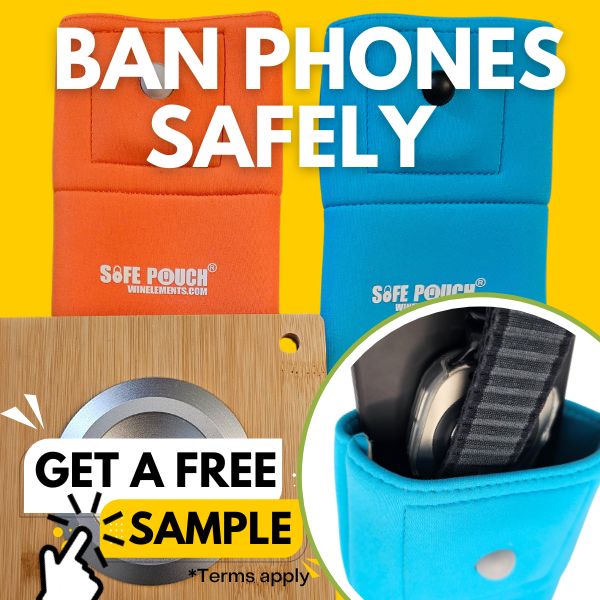
Win Elements | Lockable Phone Pouch
https://www.winelements.com/
Patented lockable phone pouches with multi-tiered lockers for phone locking pouches.
